A young woman once visited a beauty salon before an important event. She wanted a new hairstyle, glowing skin, and a confident look.
The salon had two professionals available—one was a cosmetologist who specialized in hair styling and overall beauty treatments, and the other was an esthetician who focused on skincare and facial treatments.
The customer wondered which professional she actually needed. This everyday situation explains why many people search for the difference between cosmetology and esthetician.
Both careers belong to the beauty industry, yet their training, skills, and services are not the same. Understanding the difference between cosmetology and esthetician helps students choose the right career path and helps clients select the right professional for their beauty needs.
The difference between cosmetology and esthetician also clarifies how the beauty industry divides its specialties to provide better services.
Key Difference Between Cosmetology and Esthetician
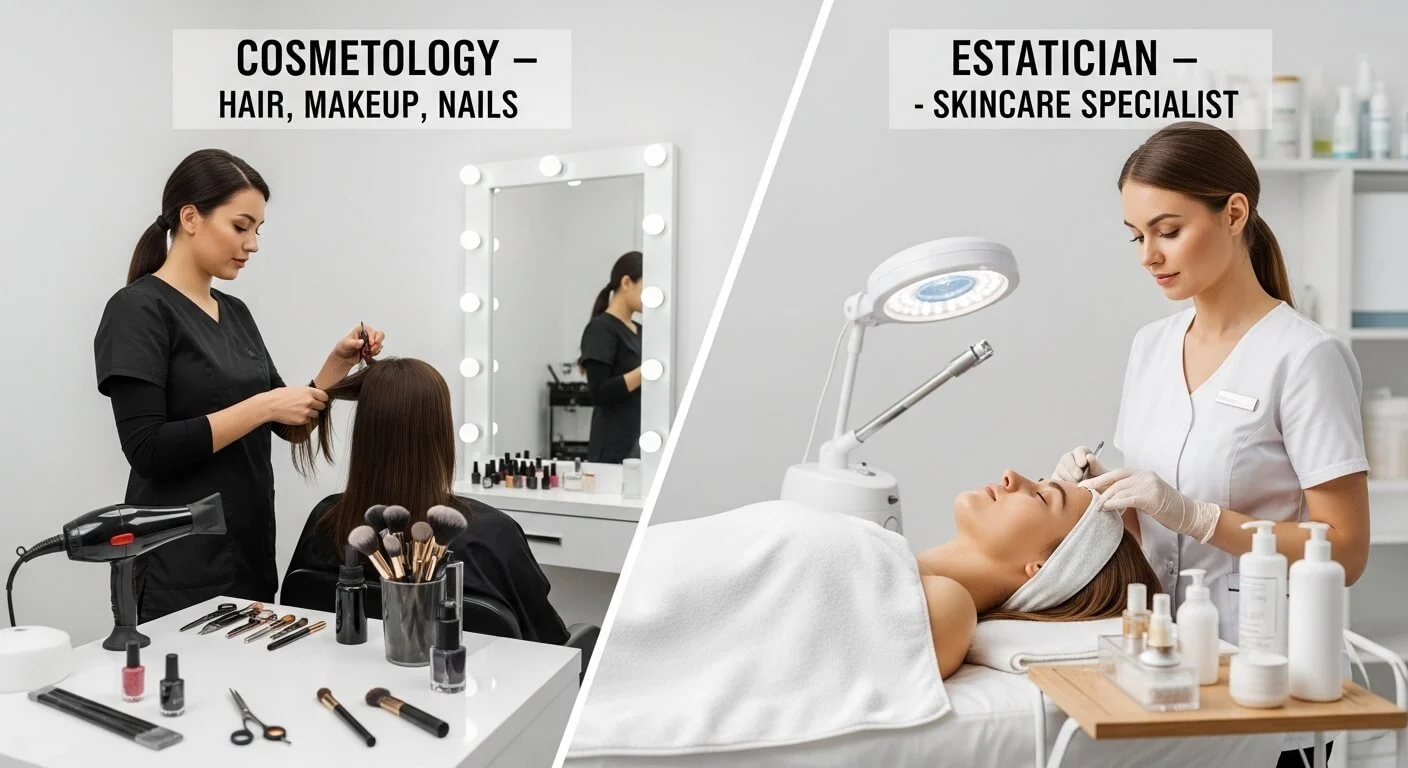
The main difference between cosmetology and esthetician is their area of expertise. Cosmetology covers a wide range of beauty services including hair, makeup, nails, and basic skincare, while an esthetician mainly focuses on skincare treatments such as facials, exfoliation, and skin therapy.
Why Is Their Difference Important to Know?
Understanding the difference between cosmetology and esthetician is important for both learners and professionals. Students interested in beauty careers can choose the right training program based on their interests. Beauty businesses also depend on this distinction to assign the right services to trained professionals. In society, these roles help people maintain personal grooming, skincare health, and confidence.
Pronunciation
| Word | US Pronunciation | UK Pronunciation |
|---|---|---|
| Cosmetology | koz-muh-TOL-uh-jee | koz-muh-TOL-uh-jee |
| Esthetician | es-thuh-TISH-uhn | ees-thuh-TISH-uhn |
Now that we understand the basic idea, let us explore the detailed difference between cosmetology and esthetician.
Difference Between Cosmetology and Esthetician
1. Scope of Work
Cosmetology:
Covers hair, nails, makeup, and basic skincare.
Example 1: A cosmetologist may cut and style hair.
Example 2: They may also apply makeup for special events.
Esthetician:
Focuses mainly on skincare treatments.
Example 1: An esthetician performs facials.
Example 2: They provide skin exfoliation and cleansing treatments.
2. Training Focus
Cosmetology:
Training includes hair cutting, coloring, nail care, and makeup.
Example 1: Students learn hair styling techniques.
Example 2: They practice manicure and pedicure skills.
Esthetician:
Training focuses on skin health and facial therapy.
Example 1: Students learn facial massage.
Example 2: They study different skin types.
3. Work Environment
Cosmetology:
Often works in beauty salons or hair studios.
Example 1: A cosmetologist may work in a hair salon.
Example 2: They may also work in fashion or film industries.
Esthetician:
Usually works in spas or skincare clinics.
Example 1: Estheticians provide spa facial treatments.
Example 2: They may work in dermatology clinics.
4. Main Services
Cosmetology:
Hair styling, makeup, and nail services.
Example 1: Bridal makeup application.
Example 2: Hair coloring and styling.
Esthetician:
Skin-focused services.
Example 1: Chemical peels.
Example 2: Deep skin cleansing facials.
5. Tools Used
Cosmetology:
Uses hair dryers, curling irons, nail tools, and makeup kits.
Example 1: A hair straightener for styling.
Example 2: Nail polish tools for manicure.
Esthetician:
Uses skincare equipment.
Example 1: Facial steamers.
Example 2: Skin exfoliation devices.
6. Professional Goal
Cosmetology:
Enhancing overall appearance.
Example 1: Creating stylish hairstyles.
Example 2: Improving beauty with makeup.
Esthetician:
Improving skin health.
Example 1: Treating dry skin.
Example 2: Helping reduce acne.
7. Client Needs
Cosmetology:
Clients seeking beauty styling.
Example 1: Haircuts for fashion trends.
Example 2: Makeup for events.
Esthetician:
Clients seeking skin care.
Example 1: Acne treatment facials.
Example 2: Skin rejuvenation therapy.
8. Work Specialization
Cosmetology:
Broad beauty specialization.
Example 1: Hair and nails services together.
Example 2: Makeup for photography.
Esthetician:
Narrow specialization in skincare.
Example 1: Skin analysis.
Example 2: Anti-aging treatments.
9. Industry Role
Cosmetology:
Part of the larger beauty and fashion industry.
Example 1: Works in salons and studios.
Example 2: Supports fashion events.
Esthetician:
Part of the skincare and wellness industry.
Example 1: Spa treatments.
Example 2: Skin therapy clinics.
10. Client Outcomes
Cosmetology:
Improves style and beauty appearance.
Example 1: Trendy haircut.
Example 2: Professional makeup look.
Esthetician:
Improves skin condition and health.
Example 1: Clearer skin after facial treatment.
Example 2: Hydrated skin after therapy.
Nature and Behaviour of Both
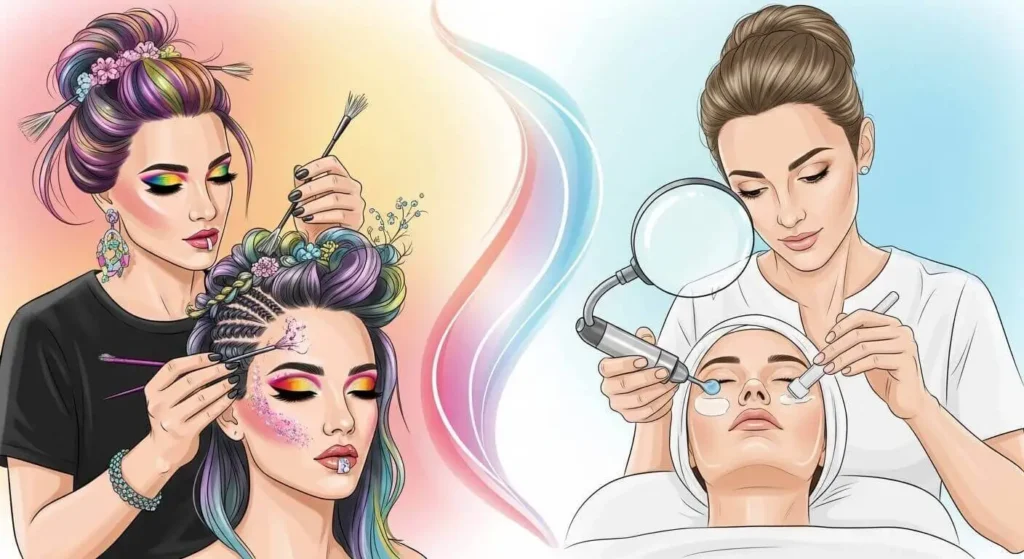
Cosmetology
Cosmetology is creative and artistic. Professionals experiment with hairstyles, makeup designs, and beauty trends to improve a person’s appearance.
Esthetician
Estheticians focus more on skincare science and treatment. Their work is careful, precise, and related to skin health.
Why People Are Confused About Their Use
People often confuse cosmetology and esthetician because both careers exist in the beauty industry and sometimes work in the same salon or spa environment.
Table Showing Difference and Similarity
| Feature | Cosmetology | Esthetician |
|---|---|---|
| Main Focus | Hair, nails, makeup | Skincare |
| Training | Broad beauty training | Skin treatment training |
| Workplace | Beauty salons | Spas and skincare clinics |
| Similarity | Both improve personal appearance |
Which Is Better in What Situation?
Cosmetology
Cosmetology is better when someone needs complete beauty services such as hair styling, makeup, or nail treatments.
Esthetician
An esthetician is better when someone needs professional skincare treatments such as facials or skin therapy.
Metaphors and Similes
“Her hairstylist worked like a cosmetology artist, shaping beauty like a painter shapes colors.”
“The facial treatment felt like an esthetician polishing a jewel.”
Connotative Meaning
Cosmetology – Positive
Associated with beauty, style, and creativity.
Example: Cosmetology transformed the model’s appearance.
Esthetician – Positive
Associated with skincare health and wellness.
Example: The esthetician helped improve her skin confidence.
Idioms or Proverbs (Creative Usage)
“Beauty in skilled hands.”
Example: With a trained cosmetologist, beauty truly lies in skilled hands.
“Skin tells the story.”
Example: The esthetician believes that skin tells the story of a person’s care.
Works in Literature
- Beauty Therapy Foundations – Educational Non-fiction, Lorraine Nordmann, 2012
- Milady Standard Cosmetology – Educational Textbook, Milady Publishing, 2016
Movies Related to Beauty Industry
- Blow Dry (2001, UK)
- The Devil Wears Prada (2006, USA)
Frequently Asked Questions
1. Is cosmetology the same as esthetician?
No. Cosmetology covers hair, makeup, and nails, while estheticians specialize in skincare.
2. Which career focuses on skin care?
An esthetician specializes in skincare treatments.
3. Who performs hair styling?
Cosmetologists perform hair cutting and styling.
4. Can a cosmetologist do facials?
Some cosmetologists provide basic facials, but estheticians specialize in advanced treatments.
5. Which career is more specialized?
Esthetician is more specialized because it mainly focuses on skincare.
How Both Are Useful for Surroundings
Both professions improve personal grooming and confidence in society. Cosmetologists enhance style and fashion trends, while estheticians help people maintain healthy skin.
Final Words for Both
Cosmetology represents creativity and beauty styling, while esthetician work focuses on skincare health and professional skin treatments.
Conclusion
The difference between cosmetology and esthetician lies mainly in their specialization within the beauty industry. Cosmetology covers services like hair, makeup, and nails, while estheticians focus mainly on skincare treatments and skin health. Understanding this difference helps clients choose the right beauty professional and helps students select the right career path. Both careers play an important role in improving personal appearance and confidence.
Learn more related article:
Difference Between Helios and Apollo: Greek Sun Gods Explained