During a power outage in a small workshop, the owner decided to install a generator. When he looked at generator specifications, he saw two confusing terms: kW and kVA.
The generator label showed “10 kVA,” but an electrician explained that the actual usable power might be measured in kW. This situation often makes people curious about the difference between kW and kVA.
Both units relate to electrical power, yet they measure different aspects of electricity in a system. Understanding the difference between kW and kVA is important when selecting generators, transformers, or electrical equipment.
For students, engineers, and technicians, knowing the difference between kW and kVA helps avoid mistakes in power calculations and ensures electrical systems work efficiently and safely.
Key Difference Between kW and kVA
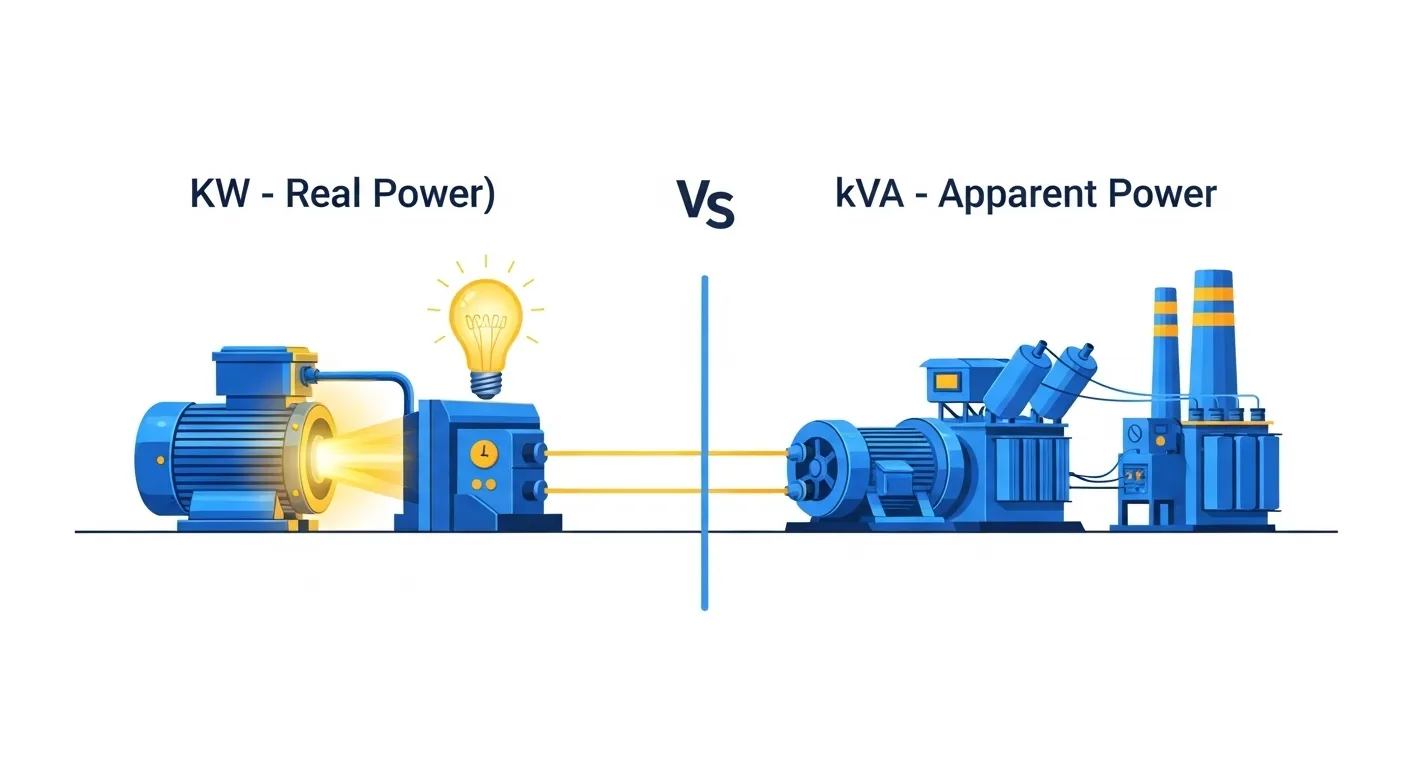
The main difference between kW and kVA is that kW (kilowatts) measures real or actual power used by electrical equipment, while kVA (kilovolt-amperes) measures apparent power, which includes both real power and reactive power in an electrical system.
Why Is Their Difference Important to Know?
Understanding the difference between kW and kVA is essential for learners, electricians, and engineers. It helps them correctly calculate power requirements for electrical devices. Businesses that rely on generators or heavy machinery must know this difference to prevent overload and improve efficiency. In modern society, electrical systems power homes, industries, hospitals, and communication networks. Knowing the difference between kW and kVA helps professionals design reliable systems and ensures safe and efficient use of electricity.
Pronunciation
| Word | US Pronunciation | UK Pronunciation |
| kW | kay-double-you | kay-double-you |
| kVA | kay-vee-ay | kay-vee-ay |
Now that we understand the basic meaning, let us explore the detailed difference between kW and kVA and how they are used in electrical systems.
Difference Between kW and kVA
1. Definition
kW:
Represents real or actual electrical power used by devices.
Example 1: A heater rated at 2 kW uses 2 kilowatts of real power.
Example 2: An electric oven may consume 3 kW during operation.
kVA:
Represents apparent power in an electrical system.
Example 1: A generator may be rated at 10 kVA.
Example 2: A transformer capacity may be measured in kVA.
2. Meaning in Electrical Systems
kW:
Shows the power that performs useful work.
Example 1: Running a motor.
Example 2: Lighting a building.
kVA:
Shows the total power supplied in a circuit.
Example 1: Power delivered by a generator.
Example 2: Total electrical load capacity.
3. Relation with Power Factor
kW:
Depends on the power factor.
Example 1: If power factor is 1, kW equals kVA.
Example 2: If power factor is 0.8, kW becomes less than kVA.
kVA:
Independent of power factor.
Example 1: Generator rating remains the same.
Example 2: Transformer capacity does not change with load type.
4. Usage
kW:
Commonly used for electrical appliances.
Example 1: Air conditioners rated in kW.
Example 2: Electric heaters rated in kW.
kVA:
Commonly used for generators and transformers.
Example 1: Generator capacity labeled in kVA.
Example 2: Transformer ratings in power stations.
5. Formula Relationship
kW:
kW = kVA × Power Factor
Example 1: 10 kVA generator with PF 0.8 = 8 kW.
Example 2: 20 kVA generator with PF 0.9 = 18 kW.
kVA:
kVA = Voltage × Current / 1000
Example 1: Used to calculate generator rating.
Example 2: Used to measure system capacity.
6. Type of Power
kW:
Represents real power.
Example 1: Power used in heating.
Example 2: Power used in lighting.
kVA:
Represents apparent power.
Example 1: Power supplied by generators.
Example 2: Power delivered in electrical systems.
7. Application Areas
kW:
Used in homes and appliances.
Example 1: Washing machines rated in kW.
Example 2: Electric kettles rated in kW.
kVA:
Used in industrial electrical systems.
Example 1: Industrial generators.
Example 2: Power transformers.
8. Measurement Purpose
kW:
Measures usable power.
Example 1: Electricity bill calculations.
Example 2: Appliance energy consumption.
kVA:
Measures system capacity.
Example 1: Generator sizing.
Example 2: Transformer design.
9. Impact on Electricity Bills
kW:
Used for energy billing.
Example 1: Household electricity measured in kWh.
Example 2: Industrial usage billed based on real power.
kVA:
Used in large commercial electrical systems.
Example 1: Industries may be billed in kVA demand.
Example 2: Utility companies monitor kVA load.
10. Importance in Power Systems
kW:
Helps measure actual energy usage.
Example 1: Energy consumption monitoring.
Example 2: Efficiency calculations.
kVA:
Helps determine equipment capacity.
Example 1: Generator selection.
Example 2: Transformer design.
Nature and Behaviour of Both
kW
kW represents the actual working power that performs useful tasks such as running motors, lighting bulbs, and heating appliances.
kVA
kVA represents the total electrical power supplied, including both useful power and reactive power required for system operation.
Why People Are Confused About Their Use
People often confuse kW and kVA because both measure electrical power and are commonly seen on generator and equipment labels. The difference lies mainly in power factor, which many beginners do not fully understand.
Table Showing Difference and Similarity
| Feature | kW | kVA |
| Meaning | Real power | Apparent power |
| Power Type | Useful working power | Total supplied power |
| Usage | Appliances and energy billing | Generators and transformers |
| Similarity | Both measure electrical power |
Which Is Better in What Situation?
kW
kW is better when measuring actual energy consumption. It is useful for calculating electricity bills and understanding how much power appliances use in homes or offices.
kVA
kVA is better when measuring total system capacity. It helps engineers choose the correct generator or transformer to handle electrical loads safely.
Metaphors and Similes
- “kW works like the engine power of a car, doing the real work.”
- “kVA is like the total fuel capacity, showing the overall energy potential.”
Connotative Meaning
kW – Neutral / Positive
Represents efficiency and real performance.
Example: The machine delivered 5 kW of effective power.
kVA – Neutral
Represents electrical capacity and system capability.
Example: The transformer has a capacity of 50 kVA.
Idioms or Proverbs (Creative Usage)
“Power behind the work.”
Example: In electrical systems, kW is the power behind the work.
“Capacity matters.”
Example: Engineers remember that capacity matters when choosing kVA ratings.
Works in Literature
- Electrical Engineering Fundamentals – Technical Textbook, Leonard S. Bobrow, 2011
- Electric Power Systems – Engineering Textbook, C.L. Wadhwa, 2006
Movies Related to Electricity or Power
- The Current War (2017, USA)
- Tesla (2020, USA)
Frequently Asked Questions
1. What is the main difference between kW and kVA?
kW measures real power used by devices, while kVA measures apparent power in an electrical system.
2. Why are generators rated in kVA?
Generators are rated in kVA because they supply total apparent power regardless of load power factor.
3. Can kW equal kVA?
Yes, when the power factor is 1, kW equals kVA.
4. Which unit is used for electricity billing?
Electricity bills usually use kWh, which is based on kW.
5. Why is power factor important?
Power factor shows how efficiently electrical power is used in a system.
How Both Are Useful for Surroundings
Both kW and kVA help design efficient electrical systems that power homes, industries, hospitals, and transportation networks.
Final Words for Both
kW represents the actual usable power, while kVA represents the total electrical capacity available in a system.
Conclusion
The difference between kW and kVA lies in how they measure electrical power. kW represents real power that performs useful work, while kVA represents apparent power that includes both real and reactive components. Understanding the difference between kW and kVA helps engineers, technicians, and consumers select the correct electrical equipment and maintain efficient power systems. Whether designing generators or calculating electricity usage, both units play a vital role in modern electrical engineering.
Learn more about:
Difference Between Cosmetology and Esthetician :Key Differences