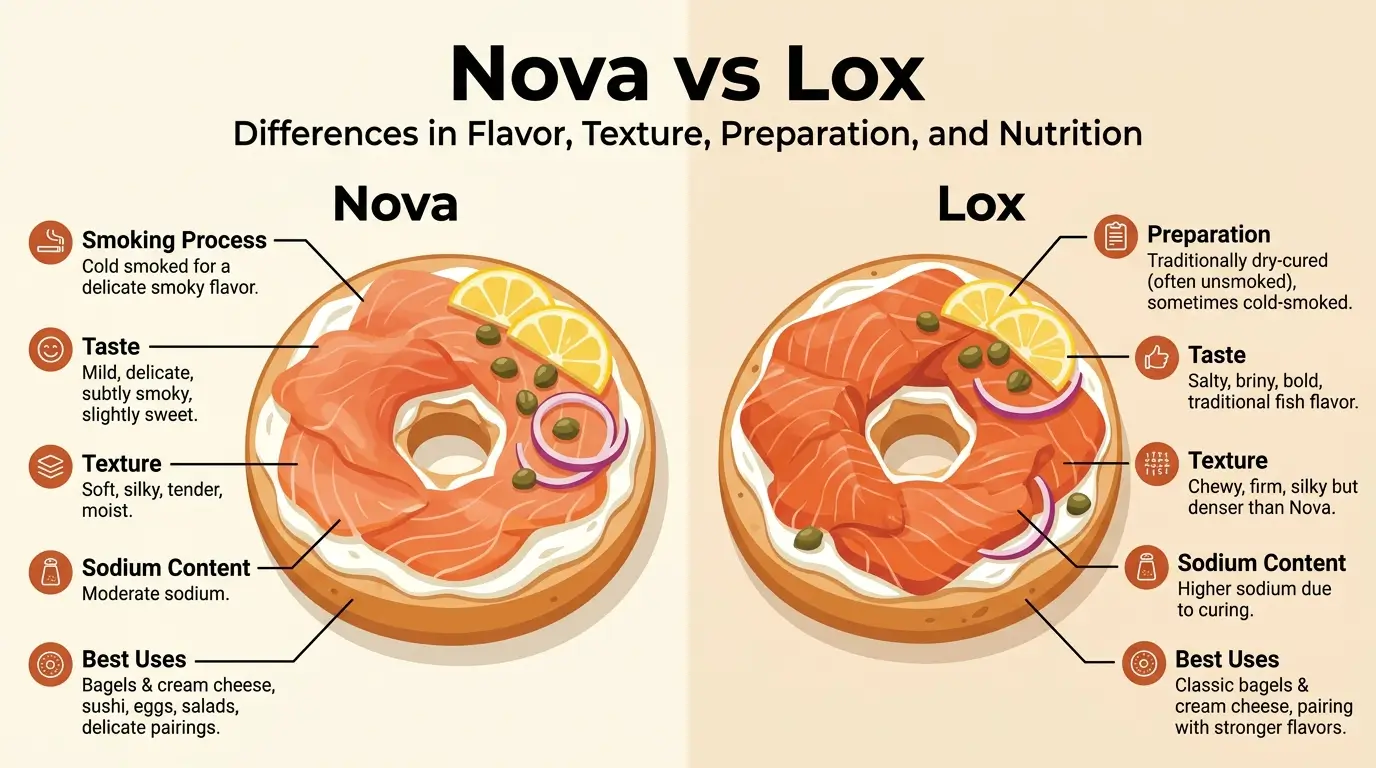
The main difference between Nova and lox is how they are prepared. Nova is lightly smoked salmon with a mild, smoky flavor, while lox is salmon that is cured in salt but not smoked. Both are popular deli foods often served on bagels, but Nova has a softer smoky taste, whereas lox is noticeably saltier and more intensely cured
Picture yourself standing at a breakfast café, looking at a menu that offers both Nova and lox on a bagel. At first glance, they seem identical.
Both are thin slices of salmon, both are popular breakfast choices, and both are commonly found in delicatessens. Yet many people wonder whether there is actually a difference between them.
The confusion surrounding Nova vs Lox is understandable because the two products share a similar appearance and are often served in the same dishes. However, their preparation methods, flavors, textures, and histories are quite different.
Understanding the distinction can help you choose the option that best suits your taste preferences and nutritional goals. In this guide, we’ll explore every important aspect of Nova vs Lox, from their origins and production methods to their taste, texture, and culinary uses.
Nova vs Lox at a Glance
| Feature | Nova | Lox |
| Best Known For | Mild smoky flavor | Traditional salt-cured salmon |
| Main Difference | Smoked after curing | Salt-cured only |
| Texture | Tender and silky | Firm and dense |
| Flavor | Mild and smoky | Salty and rich |
| Popular Use | Bagels and cream cheese | Traditional deli sandwiches and bagels |
| Similarity | Both are cured salmon products | Both are popular breakfast toppings |
What Is the Difference Between Nova and Lox?
The primary difference between Nova and lox is the preparation process. Lox is salmon that has been cured in a salt brine, while Nova is cured and then lightly cold-smoked. This smoking process gives Nova a distinctive smoky flavor that traditional lox does not have.
Although both are served in similar ways, Nova generally tastes milder and less salty, whereas lox delivers a stronger cured-salmon flavor.
Why Is This Difference Important?
Importance for Food Lovers
Knowing the difference helps diners select the flavor profile they enjoy most.
Importance for Home Cooks
Recipes often call specifically for either Nova or lox because their flavors affect the final dish differently.
Importance for Nutrition-Conscious Consumers
The curing and smoking processes influence sodium levels and nutritional characteristics.
Real-World Relevance
Understanding the distinction prevents ordering mistakes and helps consumers make informed food choices.
Pronunciation
| Word | US Pronunciation | UK Pronunciation |
| Nova | NO-vuh | NO-vuh |
| Lox | LOKS | LOKS |
Now that we understand the basics, let’s explore the detailed differences between Nova and lox.
Origin and History of Nova and Lox
Nova
Nova salmon originated from Nova Scotia, Canada. Historically, salmon from this region was lightly cured and smoked before being shipped to major cities such as New York. Over time, the term “Nova” became associated with lightly smoked salmon regardless of its actual origin.
Lox
Lox traces its roots to Eastern European Jewish communities. The word “lox” comes from the Yiddish word for salmon. Before refrigeration became common, curing salmon with salt was an effective preservation method, leading to the creation of traditional lox.
How Nova and Lox Ar
Nova Is Made
- Fresh salmon is selected.
- The fish is cured in salt.
- It is cold-smoked at a low temperature.
- The salmon develops a delicate smoky flavor.
- It is sliced thinly for serving.
Lox Is Made
- Fresh salmon is selected.
- The fish is heavily cured in salt brine.
- No smoking process is used.
- The salmon develops a rich cured flavor.
- It is sliced thinly for serving.
Nova vs Lox – 10 Key Differences
1. Definition
Nova
Nova is cold-smoked salmon that has been cured before smoking.
Examples:
- Nova on a bagel with cream cheese.
- Nova in smoked salmon appetizers.
Real-world relevance:
Popular in modern delicatessens and breakfast menus.
Lox
Lox is salmon preserved solely through salt curing.
Examples:
- Traditional lox bagels.
- Jewish deli platters.
Real-world relevance:
Represents one of the oldest salmon preservation methods.
2. Origin
Nova
Originated from the smoked salmon traditions of Nova Scotia.
Examples:
- Canadian-style smoked salmon.
- Modern deli Nova salmon.
Real-world relevance:
Often associated with premium smoked salmon products.
Lox
Originated in Eastern European Jewish cuisine.
Examples:
- Traditional Jewish breakfast spreads.
- Historical preservation methods.
Real-world relevance:
Remains an important part of Jewish culinary culture.
3. Preparation Method
Nova
Cured and then cold-smoked.
Examples:
- Smoked salmon platters.
- Gourmet brunch dishes.
Real-world relevance:
Produces a complex flavor profile.
Lox
Salt-cured only.
Examples:
- Traditional deli preparations.
- Authentic Jewish-style bagels.
Real-world relevance:
Maintains the original cured-salmon taste.
4. Smoking Process
Nova
Undergoes cold smoking.
Examples:
- Light smoke aroma.
- Delicate wood-smoke notes.
Real-world relevance:
Creates the characteristic Nova flavor.
Lox
Not smoked.
Examples:
- Pure cured-salmon taste.
- No smoky aroma.
Real-world relevance:
Appeals to those who prefer traditional cured fish.
5. Flavor
Nova
Mild, buttery, and smoky.
Examples:
- Creamy breakfast sandwiches.
- Gourmet salads.
Real-world relevance:
Preferred by many first-time smoked salmon eaters.
Lox
Rich, salty, and intensely savory.
Examples:
- Classic bagel toppings.
- Traditional deli meals.
Real-world relevance:
Favored by people who enjoy stronger flavors.
This is Part 1. The remaining sections (Differences 6–10, similarities, nutrition, cooking uses, pros & cons, FAQs, conclusion, etc.) would continue in Part 2.
Nova vs Lox – 10 Key Differences
6. Texture
Nova
Nova has a silky, tender, and delicate texture due to the cold-smoking process.
Examples:
- Smooth slices on a breakfast bagel.
- Soft pieces in a smoked salmon salad.
Real-world relevance:
Its gentle texture makes it appealing to people who prefer a melt-in-your-mouth experience.
Lox
Lox has a firmer and denser texture because it is heavily salt-cured.
Examples:
- Thick slices on traditional bagels.
- Cured salmon platters.
Real-world relevance:
The firm texture provides a more traditional cured fish experience.
7. Salt Content
Nova
Nova generally contains less salt than lox.
Examples:
- Lightly seasoned breakfast dishes.
- Gourmet smoked salmon appetizers.
Real-world relevance:
May be preferred by individuals watching their sodium intake.
Lox
Lox contains a higher amount of salt due to extensive curing.
Examples:
- Traditional deli-style servings.
- Authentic Jewish-style breakfasts.
Real-world relevance:
The saltiness contributes significantly to its distinctive flavor.
8. Appearance
Nova
Nova often has a slightly glossy appearance with subtle color variations from smoking.
Examples:
- Light pink smoked slices.
- Elegant seafood platters.
Real-world relevance:
Its attractive presentation makes it popular in upscale dining.
Lox
Lox usually appears darker and more uniform in color.
Examples:
- Deep orange cured slices.
- Traditional deli displays.
Real-world relevance:
Its appearance reflects the curing process rather than smoking.
9. Culinary Uses
Nova
Nova is commonly used in modern brunch dishes.
Examples:
- Bagels with cream cheese.
- Smoked salmon omelets.
Real-world relevance:
Works well in both traditional and contemporary recipes.
Lox
Lox is often associated with traditional deli cuisine.
Examples:
- Classic bagels and lox.
- Jewish holiday spreads.
Real-world relevance:
Maintains a strong connection to cultural food traditions.
10. Nutritional Value
Nova
Nova provides high-quality protein and omega-3 fatty acids.
Examples:
- Protein-rich breakfasts.
- Healthy seafood meals.
Real-world relevance:
Supports heart and brain health when consumed as part of a balanced diet.
Lox
Lox also offers protein and omega-3s but often contains more sodium.
Examples:
- Traditional cured fish meals.
- High-protein snacks.
Real-world relevance:
Provides nutritional benefits but may require moderation for those limiting sodium.
Similarities Between Nova and Lox
Despite their differences, Nova and lox share several characteristics:
- Both are made from salmon.
- Both undergo a curing process.
- Both are typically sliced thinly.
- Both are rich in protein.
- Both contain beneficial omega-3 fatty acids.
- Both are popular breakfast and brunch foods.
- Both are frequently served with bagels and cream cheese.
Taste and Texture Comparison
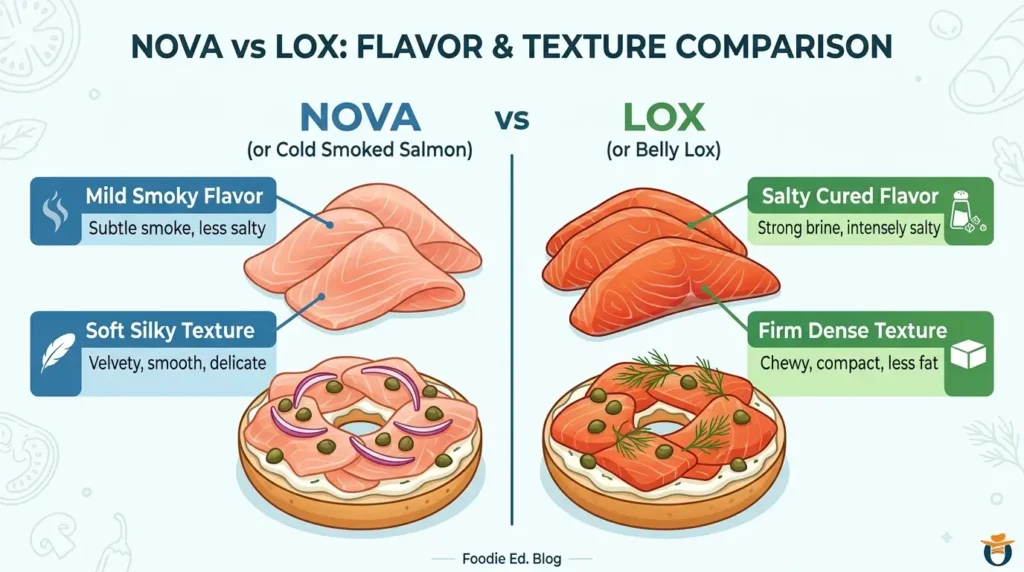
| Feature | Nova | Lox |
| Taste | Mild and smoky | Salty and savory |
| Aroma | Light smoke scent | Little to no smoke aroma |
| Texture | Soft and silky | Firm and dense |
| Aftertaste | Smooth and buttery | Rich and salty |
| Popular Appeal | Modern consumers | Traditional deli enthusiasts |
Nutritional Differences
| Nutrient | Nova | Lox |
| Protein | High | High |
| Omega-3 Fatty Acids | High | High |
| Calories | Moderate | Moderate |
| Sodium | Lower | Higher |
| Fat Content | Moderate | Moderate |
Both options provide excellent nutritional value, but sodium levels can vary significantly depending on preparation methods.
Best Uses in Cooking
Nova
Nova works best in recipes where a mild smoky flavor enhances the dish.
Popular uses include:
- Bagels and cream cheese
- Breakfast wraps
- Eggs Benedict
- Pasta dishes
- Fresh salads
Lox
Lox shines in traditional recipes that celebrate its cured flavor.
Popular uses include:
- Classic bagels
- Deli platters
- Appetizer trays
- Open-faced sandwiches
- Traditional Jewish cuisine
Nova vs Lox on Bagels
Many people assume all salmon served on bagels is lox, but most modern bagel shops actually serve Nova-style smoked salmon.
Nova offers a balanced flavor that pairs well with cream cheese, capers, onions, and tomatoes. Traditional lox provides a stronger salty taste that appeals to those seeking an authentic deli experience.
Why Do People Confuse Nova and Lox?
Several factors contribute to the confusion:
- Similar appearance
- Both are thinly sliced salmon
- Both are served on bagels
- Many restaurants use the terms interchangeably
- Both are sold in deli counters
The biggest misconception is that all smoked salmon is lox. In reality, traditional lox is cured but not smoked.
Difference and Similarity Table
| Feature | Nova | Lox |
| Made From | Salmon | Salmon |
| Cured | Yes | Yes |
| Smoked | Yes | No |
| Flavor | Mild and smoky | Salty and rich |
| Texture | Soft | Firm |
| Sodium Level | Lower | Higher |
| Traditional Origin | Nova Scotia | Eastern Europe |
| Popular Use | Modern brunch dishes | Traditional deli cuisine |
| Protein | High | High |
| Omega-3 Content | High | High |
Which Is Better?
Nova Is Better When…
Nova is a better choice if you enjoy a mild, smoky flavor and a softer texture. It appeals to people who are new to smoked salmon and prefer a balanced taste that is not overly salty. Nova also works exceptionally well in modern brunch dishes, salads, and gourmet recipes. If you appreciate subtle flavors and versatility in cooking, Nova is often the preferred option.
Lox Is Better When…
Lox is a better choice if you enjoy traditional cured foods and stronger savory flavors. Its rich, salty taste pairs perfectly with classic bagels, cream cheese, onions, and capers. People who value authenticity and historical food traditions often prefer lox. If you’re looking for the original deli experience, lox remains the gold standard.
Pros and Cons
Nova Pros
- Mild flavor
- Smoky aroma
- Softer texture
- Versatile in recipes
Nova Cons
- Less traditional
- Smoke flavor may not appeal to everyone
Lox Pros
- Authentic heritage
- Rich flavor
- Traditional preparation
- Strong culinary identity
Lox Cons
- Higher sodium content
- Saltier taste may be overwhelming for some people
Which Is Healthier?
Both Nova and lox are nutritious sources of protein and omega-3 fatty acids. However, Nova often contains slightly less sodium because it is not cured as heavily as traditional lox.
For individuals concerned about heart health or sodium intake, Nova may be the healthier choice. Nevertheless, both can be part of a balanced diet when eaten in moderation.
Buying Guide: How to Choose Between Nova and Lox
Choose Nova if:
- You enjoy smoky flavors.
- You prefer less salt.
- You want a softer texture.
- You like modern brunch dishes.
Choose Lox if:
- You enjoy traditional foods.
- You prefer a stronger savory flavor.
- You want an authentic deli experience.
- You appreciate historical culinary traditions.
Frequently Asked Questions
Is Nova the same as lox?
No. Nova is cured and smoked, while traditional lox is cured but not smoked.
Why is Nova called Nova?
The name comes from Nova Scotia, where smoked salmon was historically produced.
Which is saltier, Nova or lox?
Lox is usually saltier because it undergoes a more intensive curing process.
Can you use Nova and lox interchangeably?
Yes, in many recipes, although the flavor will be slightly different.
Which is more popular on bagels?
Today, Nova-style smoked salmon is often more commonly served on bagels than traditional lox.
How Both Contribute to Food Culture
Nova and lox play important roles in culinary traditions around the world. They contribute to breakfast culture, deli cuisine, seafood appreciation, and cultural heritage. Their popularity has helped preserve traditional salmon-curing techniques while inspiring modern culinary innovation.
Final Words
Nova and lox may look similar, but their preparation methods, flavors, and cultural backgrounds make them unique. Nova delivers a mild smoky experience, while lox offers a classic salty cured flavor rooted in tradition.
Conclusion
Understanding the difference between Nova and lox can help you make better choices when ordering at a deli, shopping for smoked salmon, or preparing meals at home. While both products start with salmon and share many nutritional benefits, their preparation methods create distinctly different flavors and textures.
Nova is lightly smoked and milder in taste, whereas lox is traditionally salt-cured and noticeably saltier. Neither option is universally better—the best choice depends on your personal preferences and culinary goals.
Whether you favor the smoky elegance of Nova or the authentic tradition of lox, both remain beloved staples in seafood and deli cuisine.
Learn more article :
Krill vs Shrimp: Key Differences in Size, Habitat and Diet