One evening, a group of friends watched a fantasy movie where a mysterious woman was called a witch, while a powerful male magician was called a warlock.
After the movie ended, everyone started debating the difference between witch and warlock. Some believed both words meant the same thing, while others thought they described completely different magical roles
. This confusion is common because fantasy books, movies, and folklore often use these terms differently. Understanding the difference between witch and warlock helps readers, students, and fantasy fans better understand mythology, history, and fictional storytelling.
The difference between witch and warlock also reflects changing cultural beliefs about magic and supernatural powers. Learning the difference between witch and warlock can make literature, movies, and folklore more meaningful and easier to understand.
Key Difference Between Witch and Warlock
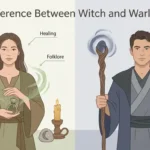
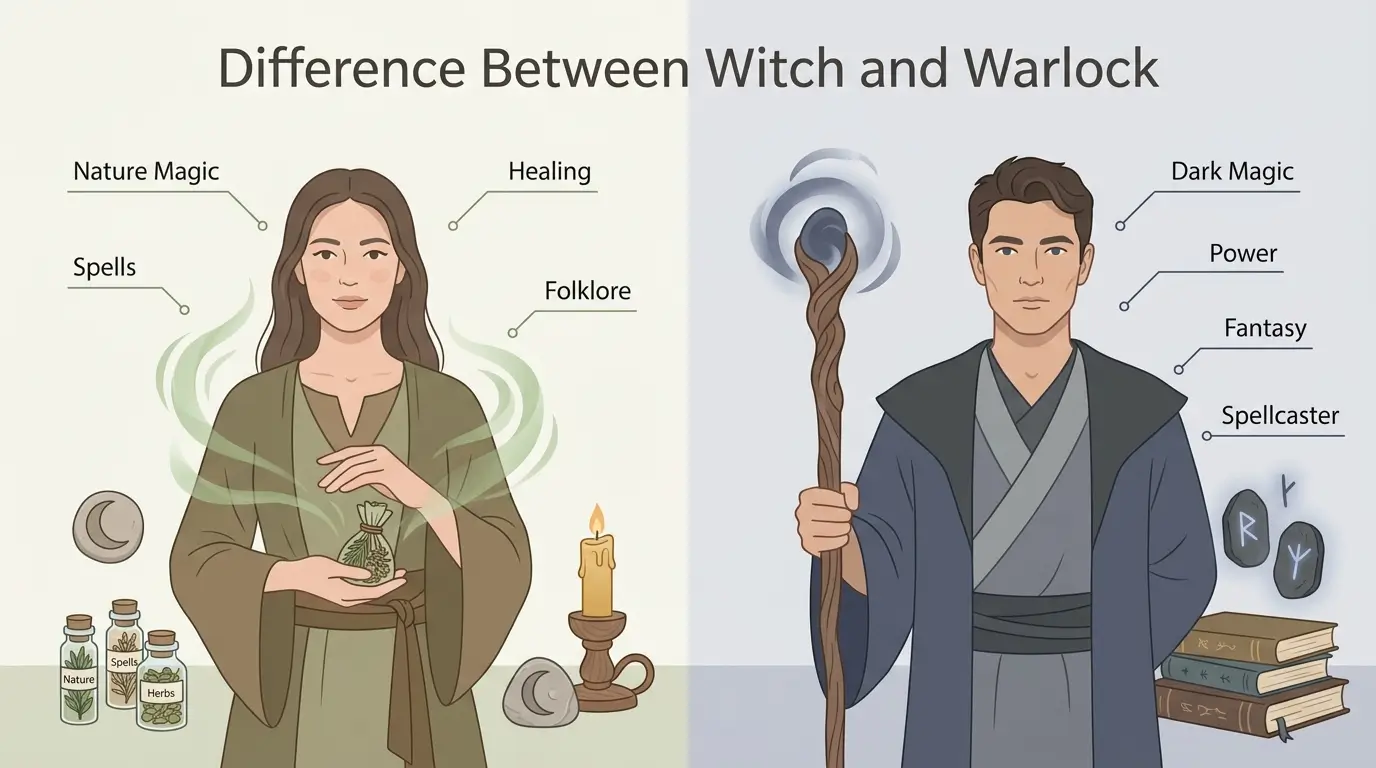
The main difference between witch and warlock is that a witch is traditionally associated with magical practices, nature, and spiritual rituals, while a warlock is often described as a male magic user or a person connected with darker or forbidden magic in folklore and fantasy stories.
Why Is Their Difference Important to Know?
Understanding the difference between witch and warlock is important for literature students, fantasy readers, and cultural researchers. These terms appear in myths, movies, books, and historical discussions about magic. Knowing their meanings helps people understand storytelling and folklore correctly. In modern society, these words are also used in games, entertainment, and spiritual communities, making their distinction culturally and socially relevant.
Pronunciation
| Word | US Pronunciation | UK Pronunciation |
| Witch | /wɪtʃ/ | /wɪtʃ/ |
| Warlock | /ˈwɔːrˌlɑːk/ | /ˈwɔːlɒk/ |
Now that we understand the basics, let us explore the detailed difference between witch and warlock and how both terms are used in history and fantasy culture.
Difference Between Witch and Warlock
1. Basic Meaning
Witch:
Traditionally linked with magic, spells, and nature-based practices.
Example 1: A witch may use herbs for healing.
Example 2: Folklore often shows witches casting spells.
Real-world relevance: Witches appear in myths and spiritual traditions.
Warlock:
Usually refers to a male magic user or dark sorcerer.
Example 1: Fantasy games describe warlocks as powerful spellcasters.
Example 2: Stories may connect warlocks with forbidden magic.
Real-world relevance: Commonly used in fantasy fiction and gaming.
2. Gender Association
Witch:
Historically used more for women.
Example 1: Fairy tales often feature female witches.
Example 2: Ancient folklore describes village witches.
Real-world relevance: The word became culturally linked with women.
Warlock:
Traditionally associated with men.
Example 1: Male sorcerers in fantasy novels.
Example 2: Video games use warlock for male magic characters.
Real-world relevance: Often used in fictional male magic roles.
3. Historical Background
Witch:
Connected to European witch trials and folklore.
Example 1: Salem witch trials.
Example 2: Medieval stories about witches.
Real-world relevance: Important in cultural history.
Warlock:
Originated from an old term meaning oath-breaker or deceiver.
Example 1: Scottish folklore used the word negatively.
Example 2: Later fantasy stories changed its meaning.
Real-world relevance: More common in fictional settings today.
4. Connection With Nature
Witch:
Often linked with herbs, nature, and rituals.
Example 1: Using plants for remedies.
Example 2: Moon-based ceremonies.
Real-world relevance: Modern spiritual groups use nature-based practices.
Warlock:
Usually linked with supernatural power rather than nature.
Example 1: Dark magical contracts.
Example 2: Powerful magical attacks in games.
Real-world relevance: More fantasy-oriented than nature-based.
5. Use in Fantasy Stories
Witch:
Shown as mysterious or wise characters.
Example 1: Helpful village witch.
Example 2: Evil witch in fairy tales.
Real-world relevance: Common in children’s stories.
Warlock:
Often shown as dangerous or powerful.
Example 1: Dark wizard villains.
Example 2: Magical warriors in fantasy games.
Real-world relevance: Popular in fantasy entertainment.
6. Public Image
Witch:
Can have positive or negative meanings.
Example 1: Wise healer.
Example 2: Evil spellcaster.
Real-world relevance: Modern views are more balanced.
Warlock:
Usually has a darker image.
Example 1: Dark magic user.
Example 2: Villain in fantasy films.
Real-world relevance: Often connected with danger.
7. Religious Connection
Witch:
Sometimes connected with pagan or spiritual traditions.
Example 1: Wiccan practices.
Example 2: Ritual ceremonies.
Real-world relevance: Some people identify spiritually as witches.
Warlock:
Rarely used in real spiritual communities.
Example 1: Mostly fictional use.
Example 2: Seen more in fantasy media.
Real-world relevance: Less common in real-life spirituality.
8. Role in Popular Culture
Witch:
Popular in movies and folklore.
Example 1: Halloween themes.
Example 2: Fantasy novels.
Real-world relevance: Recognized worldwide.
Warlock:
Popular in games and fantasy series.
Example 1: Role-playing games.
Example 2: Supernatural TV shows.
Real-world relevance: Strong presence in gaming culture.
9. Symbolism
Witch:
Represents mystery, wisdom, or fear.
Example 1: Symbol of hidden knowledge.
Example 2: Symbol of magic.
Real-world relevance: Appears in art and literature.
Warlock:
Represents power and darkness.
Example 1: Symbol of forbidden magic.
Example 2: Symbol of magical strength.
Real-world relevance: Often dramatic in storytelling.
10. Modern Interpretation
Witch:
Can describe spiritual practitioners today.
Example 1: Modern witches practicing rituals.
Example 2: Social media spiritual communities.
Real-world relevance: Used in modern spirituality.
Warlock:
Mostly remains a fantasy term.
Example 1: Fantasy games.
Example 2: Comic book characters.
Real-world relevance: Rarely used outside fiction.
Nature and Behaviour of Both
Witch
A witch is often portrayed as spiritual, mysterious, and connected with nature or rituals. Some stories show witches as wise healers, while others present them as magical villains.
Warlock
A warlock is usually portrayed as powerful, secretive, and connected with dangerous or forbidden magic. In fantasy stories, warlocks often seek magical strength or supernatural knowledge.
Why People Are Confused About Their Use?
People confuse witches and warlocks because both terms involve magic and supernatural abilities. Movies, games, and novels sometimes use the words interchangeably. Some fantasy stories even call male witches “warlocks,” while others do not, creating further confusion.
Difference and Similarity Table
| Feature | Witch | Warlock |
| Traditional Gender | Mostly female | Mostly male |
| Common Image | Nature-based magic | Dark or powerful magic |
| Historical Use | Folklore and history | Mostly fantasy |
| Symbolism | Wisdom or mystery | Power or danger |
| Similarity | Both are linked with magic and supernatural abilities |
Which Is Better in What Situation?
Witch
The term “witch” is better when discussing folklore, spiritual traditions, or fantasy stories involving nature, healing, and rituals. It is commonly used in historical discussions and modern spiritual communities. Readers interested in mythology or magical traditions often encounter this term more frequently.
Warlock
The term “warlock” is better in fantasy gaming, supernatural fiction, and action-based magical stories. It creates a stronger image of magical power and mystery. Fantasy writers and gamers often use the word to describe dark or powerful spellcasters.
Metaphors and Similes
- “Her wisdom spread like a witch’s ancient spell.”
- “He guarded secrets like a warlock protecting forbidden magic.”
- “The old forest felt mysterious like a witch’s hidden world.”
- “The warrior stood strong like a fearless warlock.”
Connotative Meaning
Witch
- Positive: Wisdom, healing, spirituality
Example: “She was viewed as a wise village witch.” - Negative: Fear, curses, evil magic
Example: “The villagers feared the witch.” - Neutral: Magical practitioner
Example: “The story mentioned a forest witch.”
Warlock
- Positive: Magical strength, mystery
Example: “The warlock protected the kingdom.” - Negative: Dark magic, danger
Example: “The evil warlock attacked the castle.” - Neutral: Male spellcaster
Example: “The game character was a warlock.”
Idioms or Proverbs
- “Magic is in the details.”
Example: The witch believed magic is in the details. - “Power can corrupt.”
Example: The warlock learned that power can corrupt.
Works in Literature
- Macbeth — Tragedy, William Shakespeare, 1606
- The Crucible — Drama, Arthur Miller, 1953
- Harry Potter and the Philosopher’s Stone — Fantasy, J. K. Rowling, 1997
Movies Related to the Topic
- The Witch — 2015, USA
- Warlock — 1989, USA
- Hocus Pocus — 1993, USA
Frequently Asked Questions
1. What is the main difference between witch and warlock?
A witch is usually linked with magical practices and nature, while a warlock is often connected with male or darker magic roles.
2. Is a warlock always male?
Traditionally yes, but modern fantasy stories may vary.
3. Are witches real?
Some people identify spiritually as witches in modern practices like Wicca.
4. Why do fantasy games use the word warlock?
Because it sounds powerful and mysterious.
5. Can a witch be good?
Yes. Many stories portray witches as wise healers or protectors.
How Both Are Useful for Society
Both witches and warlocks contribute to storytelling, literature, movies, and entertainment culture. They inspire creativity, fantasy writing, gaming worlds, and discussions about mythology and history.
Final Words for Both
Witches and warlocks both represent magical traditions and fantasy imagination, but their symbolism, history, and cultural meanings are different.
Conclusion
The difference between witch and warlock mainly lies in history, symbolism, and cultural usage. A witch is commonly associated with magical practices, nature, and folklore, while a warlock is often portrayed as a male or darker magical figure in fantasy stories. Understanding the difference between witch and warlock helps readers enjoy literature, movies, mythology, and games with greater clarity. Both terms continue to shape modern fantasy culture and storytelling in unique ways. Whether someone prefers the mysterious wisdom of a witch or the dramatic power of a warlock, both remain fascinating symbols of magic and imagination.
Learn more:
Difference Between Seamstress and Tailor: guide 2026