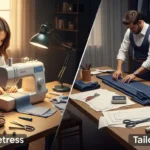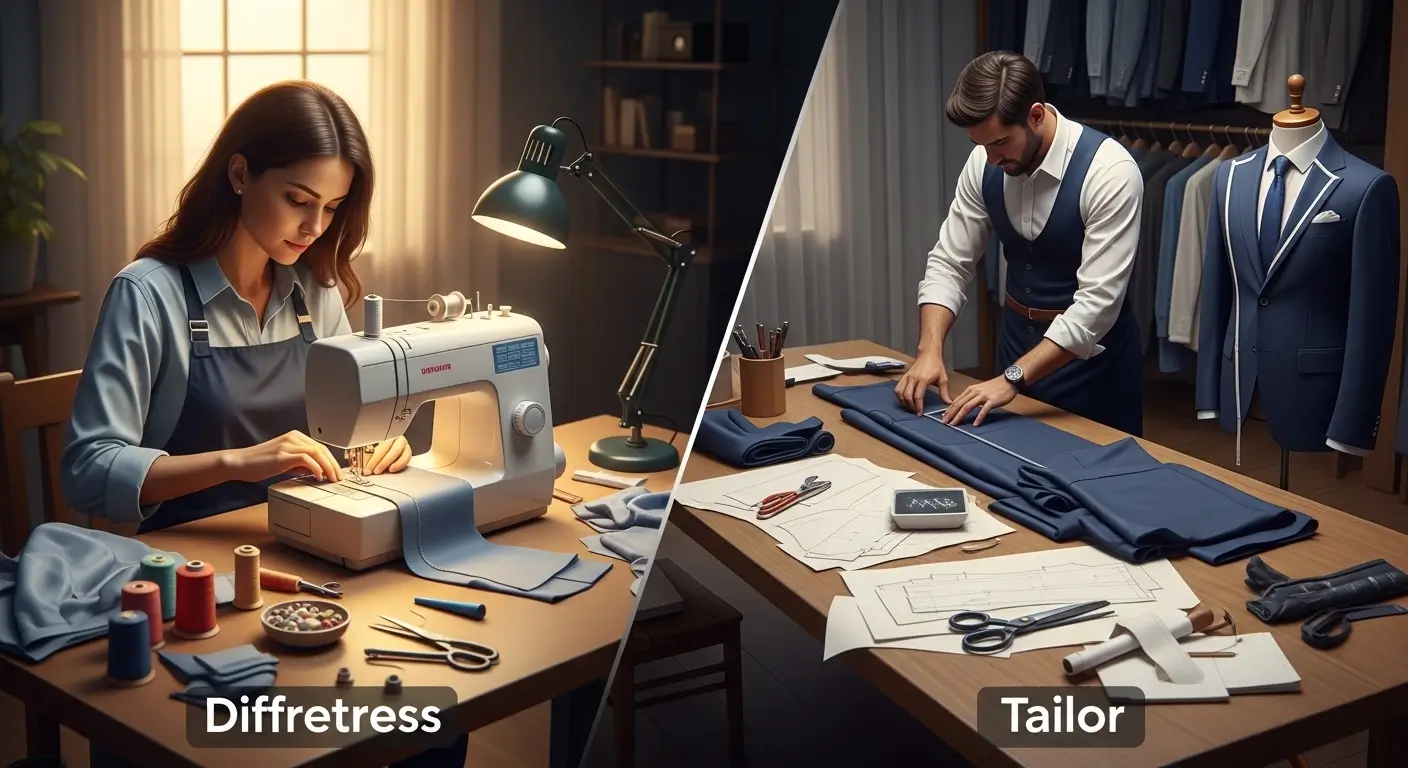
In a small town, a customer once walked into a clothing shop with a wedding outfit idea in mind. She first met a seamstress who carefully adjusted a ready-made dress to fit her perfectly.
Later, she met a tailor who was sketching a full suit from scratch for another client. Both professionals worked with fabric, needles, and measurements, yet their roles were clearly different.
This everyday situation helps explain the difference between seamstress and tailor. Many people use these terms interchangeably, but the difference between seamstress and tailor lies in skills, training, and responsibilities.
Understanding the difference between seamstress and tailor is important for customers, students, and fashion learners because it helps in choosing the right expert for clothing needs
. The difference between seamstress and tailor also reflects how the fashion industry divides creative and technical garment work.
Key Difference Between Seamstress and Tailor
The main difference is that a seamstress usually focuses on sewing, alterations, and repairing clothes, while a tailor specializes in designing, cutting, and creating custom-fitted garments from scratch.
Why Is Their Difference Important to Know?
Knowing the difference helps customers choose the right professional. It also helps fashion students select their career path. In society, both roles support the clothing industry by ensuring well-fitted and stylish garments. Without understanding this difference, people may expect the wrong service from the wrong expert.
Pronunciation
| Word | US Pronunciation | UK Pronunciation |
| Seamstress | /ˈsiːmstrəs/ | /ˈsiːmstrəs/ |
| Tailor | /ˈteɪlər/ | /ˈteɪlə/ |
Linking Hook
Now let us explore in detail how a seamstress and a tailor differ in skills, tools, and responsibilities in the fashion world.
Difference Between Seamstress and Tailor
1. Core Role
- Seamstress: Focuses on stitching and repairs.
Example: Fixing a torn dress.
Example: Shortening trousers. - Tailor: Creates full outfits.
Example: Making a custom suit.
Example: Designing a wedding dress.
2. Design Involvement
- Seamstress: Limited design work.
Example: Adjusting existing dress style.
Example: Adding small design changes. - Tailor: Full design creation.
Example: Sketching suit patterns.
Example: Designing fabric layout.
3. Training Level
- Seamstress: Basic sewing skills.
Example: Learning stitching techniques.
Example: Practicing hemming. - Tailor: Advanced tailoring education.
Example: Pattern cutting training.
Example: Measuring body structures.
4. Work Process
- Seamstress: Works on ready-made clothes.
Example: Altering jeans length.
Example: Repairing shirts. - Tailor: Works from raw fabric.
Example: Cutting fabric for suit.
Example: Stitching full dress.
5. Tools Used
- Seamstress: Basic sewing tools.
Example: Needle and thread.
Example: Small sewing machine. - Tailor: Advanced cutting tools.
Example: Measuring tape and chalk.
Example: Industrial sewing machines.
6. Customization Level
- Seamstress: Minor adjustments.
Example: Tightening waist.
Example: Fixing sleeves. - Tailor: Full customization.
Example: Custom suit fitting.
Example: Personalized shirt design.
7. Creativity Level
- Seamstress: Moderate creativity.
Example: Simple decoration.
Example: Color matching. - Tailor: High creativity.
Example: Fashion design creation.
Example: Style innovation.
8. Work Environment
- Seamstress: Small shops or home setups.
Example: Home-based sewing work.
Example: Local repair shop. - Tailor: Professional tailoring studios.
Example: Fashion boutique.
Example: Design studio.
9. Customer Interaction
- Seamstress: Direct repair requests.
Example: Fix zipper issue.
Example: Shorten sleeves. - Tailor: Detailed consultation.
Example: Body measurement discussion.
Example: Fabric selection advice.
10. Final Output
- Seamstress: Improves existing clothes.
Example: Makes old dress usable.
Example: Repairs damage. - Tailor: Creates new garments.
Example: Custom-made suit.
Example: Designer outfit.
Nature and Behaviour
Seamstress: Practical, detail-focused, and repair-oriented. Works mainly to improve or fix existing garments.
Tailor: Creative, technical, and design-oriented. Focuses on making fully customized clothing with precision.
Why People Are Confused
People confuse both because they work with similar tools and materials. Both sew fabric and deal with clothing, often in the same shops or industries.
Table: Difference and Similarity
| Feature | Seamstress | Tailor |
| Main Work | Repairs & alterations | Custom garment making |
| Creativity | Moderate | High |
| Training | Basic sewing | Advanced tailoring |
| Similarity | Both work with fabric and stitching |
Which Is Better in What Situation?
A seamstress is better when you need quick repairs or small clothing adjustments like fixing a zipper or shortening pants. It is cost-effective and fast for everyday clothing issues.
A tailor is better when you need custom-made clothing such as suits, bridal dresses, or perfectly fitted outfits. Tailors provide detailed design and precision fitting, making them ideal for special occasions.
Metaphors and Similes
- “The seamstress worked like a careful gardener, mending every thread with patience.”
- “The tailor shaped fabric like an architect designing a building.”
Connotative Meaning
Seamstress – Positive
Represents care, repair, and attention to detail.
Example: She trusted the seamstress to fix her favorite dress.
Tailor – Positive
Represents creativity, precision, and craftsmanship.
Example: The tailor created a perfect wedding suit.
Idioms or Proverbs (Creative Use)
- “A stitch in time saves nine.”
Example: The seamstress believes fixing early avoids bigger damage. - “Cut from a different cloth.”
Example: The tailor treats every client as unique.
Works in Literature
- The Tailor of Gloucester – Children’s literature, Beatrix Potter, 1903
- The Dressmaker – Fiction novel, Rosalie Ham, 2000
Movies Related to Theme
- The Dressmaker (2015, Australia)
- Phantom Thread (2017, USA/UK)
Frequently Asked Questions
1. Is seamstress the same as tailor?
No, seamstresses focus on repairs while tailors create garments.
2. Who makes custom clothes?
Tailors make custom outfits.
3. Who fixes clothes?
Seamstresses mainly handle repairs and alterations.
4. Can a seamstress become a tailor?
Yes, with advanced training.
5. Which is more skilled?
Tailors usually require more advanced technical skills.
How Both Are Useful for Surroundings
Both professionals support the fashion industry. Seamstresses reduce clothing waste by repairing clothes, while tailors create new fashion trends and personalized outfits.
Final Words for Both
Seamstresses and tailors both play important roles in clothing and fashion. One focuses on repair and adjustment, while the other focuses on creation and design.
Conclusion
The difference between seamstress and tailor is mainly based on skill level, creativity, and type of work. A seamstress specializes in repairing and altering existing garments, while a tailor focuses on designing and creating custom-made clothing from scratch. Understanding the difference between seamstress and tailor helps customers choose the right professional and helps learners enter the correct fashion career path. Both contribute significantly to the clothing industry by ensuring well-fitted, functional, and stylish outfits. Together, they maintain the balance between practicality and creativity in fashion.
Learn more article:
Difference Between kW and kVA: Understanding Real vs Apparent Power