
One morning, a friend walked into a café and asked for a latte, while another ordered a cortado. When the drinks arrived, they looked similar—both had espresso and milk—but the taste and texture were quite different.
This moment often makes people curious about the difference between latte and cortado. Many coffee lovers face this confusion because both drinks come from espresso and steamed milk, yet their balance and serving style vary.
Understanding the difference between latte and cortado helps people choose the drink that suits their taste. Some prefer a creamy, mild coffee, while others enjoy a stronger espresso flavor. L
earning the difference between latte and cortado also helps baristas, café owners, and coffee enthusiasts talk about coffee with confidence and accuracy.
Key Difference Between Latte and Cortado
The main difference between latte and cortado lies in the milk-to-espresso ratio. A latte contains more steamed milk and a thin layer of foam, creating a mild and creamy drink. A cortado has equal parts espresso and warm milk, which keeps the coffee flavor stronger and more balanced.
Why Is Their Difference Important to Know?
Knowing the difference between latte and cortado is helpful for both beginners and coffee experts. For learners, it improves coffee knowledge and ordering confidence in cafés. For professionals like baristas, understanding this difference helps them prepare drinks correctly and meet customer expectations. In society, coffee culture is growing rapidly, and knowing the correct drink adds to social awareness and appreciation of specialty beverages.
Pronunciation
| Drink | US Pronunciation | UK Pronunciation |
| Latte | /ˈlɑːteɪ/ | /ˈlɑːteɪ/ |
| Cortado | /kɔːrˈtɑːdoʊ/ | /kɔːˈtɑːdəʊ/ |
Linking Hook:
Now that we understand the basics, let’s explore the detailed difference between latte and cortado to see how these two popular coffee drinks truly compare.
Difference Between Latte and Cortado
1. Milk Ratio
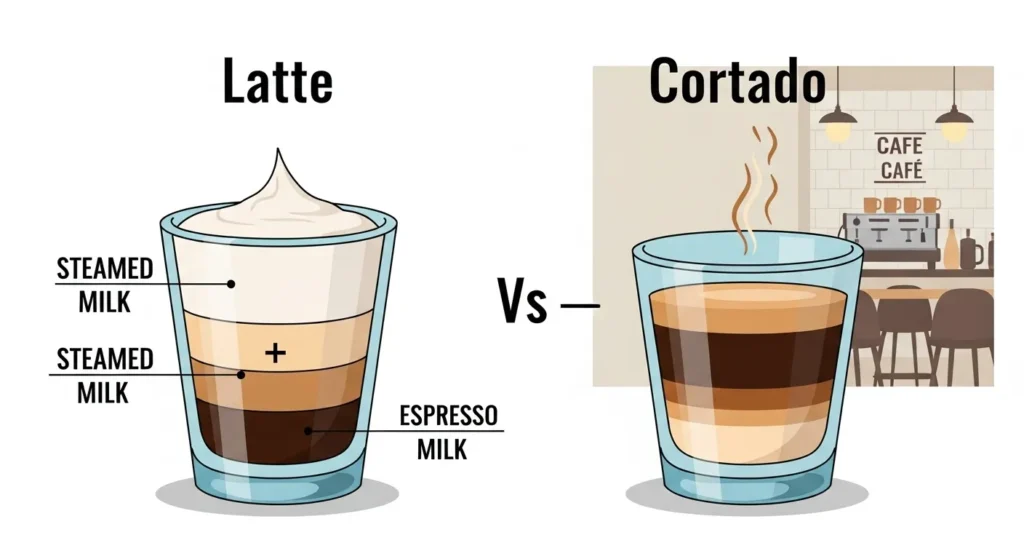
Latte: Contains a large amount of steamed milk.
Example 1: A café latte often uses three parts milk and one part espresso.
Example 2: The milk softens the coffee taste.
Cortado: Has equal parts milk and espresso.
Example 1: A cortado keeps the espresso taste strong.
Example 2: The milk only balances acidity.
2. Strength of Coffee Flavor
Latte: Mild and creamy flavor.
Example 1: Ideal for people who prefer gentle coffee.
Example 2: Many beginners choose latte first.
Cortado: Stronger espresso taste.
Example 1: Preferred by people who enjoy bold coffee.
Example 2: Coffee enthusiasts often choose cortado.
3. Foam Level
Latte: Usually has a thin layer of milk foam.
Example 1: Foam creates latte art in cafés.
Example 2: Baristas decorate it with patterns.
Cortado: Very little or no foam.
Example 1: Milk is smooth and flat.
Example 2: The drink looks simpler.
4. Cup Size
Latte: Served in a larger cup.
Example 1: Often 8–12 ounces.
Example 2: Common in breakfast cafés.
Cortado: Served in a smaller glass.
Example 1: Usually about 4 ounces.
Example 2: Popular in Spanish coffee bars.
5. Origin
Latte: Originated in Italy.
Example 1: Known as “caffè latte.”
Example 2: Popular worldwide today.
Cortado: Originated in Spain.
Example 1: Traditional in Spanish cafés.
Example 2: The name means “cut.”
6. Texture
Latte: Smooth and creamy texture.
Example 1: Milk dominates the drink.
Example 2: The mouthfeel is soft.
Cortado: Balanced and dense texture.
Example 1: Espresso remains noticeable.
Example 2: The drink feels stronger.
7. Serving Style
Latte: Often served in tall cups or mugs.
Example 1: Sometimes with flavored syrups.
Example 2: Common in coffee chains.
Cortado: Served in small glass cups.
Example 1: Usually plain without flavors.
Example 2: Traditional presentation.
8. Popular Additions
Latte: Frequently flavored with vanilla or caramel.
Example 1: Vanilla latte.
Example 2: Caramel latte.
Cortado: Rarely flavored.
Example 1: Served plain.
Example 2: Focus remains on espresso.
9. Drinking Time
Latte: Often a morning or casual drink.
Example 1: Popular with breakfast.
Example 2: Enjoyed slowly.
Cortado: Often a quick coffee break drink.
Example 1: Served after meals in Spain.
Example 2: Drunk quickly.
10. Coffee Experience
Latte: Comfortable and relaxing drink.
Example 1: Suitable for beginners.
Example 2: Gentle flavor profile.
Cortado: Intense coffee experience.
Example 1: Preferred by espresso lovers.
Example 2: More traditional coffee taste.
Nature and Behaviour of Both
Latte:
A latte behaves like a smooth, comforting beverage. The large amount of milk softens the espresso, making the drink creamy and gentle.
Cortado:
A cortado keeps espresso at the center. Milk only reduces acidity and bitterness while preserving the coffee’s natural strength.
Why People Are Confused About Their Use
People often confuse these drinks because both contain espresso and milk. Their similar appearance and café presentation also create misunderstanding. However, the ratio of milk and the intensity of coffee clearly separate them.
Table Showing Difference and Similarity
| Feature | Latte | Cortado |
| Milk Ratio | High milk | Equal milk and espresso |
| Flavor | Mild | Strong |
| Foam | Thin foam layer | Little or none |
| Cup Size | Large cup | Small glass |
| Origin | Italy | Spain |
| Similarity | Both use espresso and milk |
Which Is Better in What Situation?
Latte:
A latte is better when someone wants a gentle, creamy coffee experience. It works well for beginners, morning routines, or relaxed conversations in cafés.
Cortado:
A cortado is better when someone prefers a strong coffee flavor with balanced milk. It suits quick coffee breaks and people who enjoy the natural taste of espresso.
Use in Metaphors and Similes
- “His personality was like a latte—smooth and comforting.”
- “Her argument was sharp like a cortado—strong and direct.”
Connotative Meaning
Latte (Positive / Neutral)
Represents comfort, warmth, and relaxation.
Example: “The meeting felt calm, like sharing a latte with friends.”
Cortado (Neutral / Positive)
Represents balance and intensity.
Example: “Her ideas were like a cortado—strong but perfectly balanced.”
Idioms or Proverbs (Creative Usage)
- “Smooth as a latte” – describing something calm or gentle.
Example: His presentation was smooth as a latte. - “Strong like a cortado” – describing something powerful yet balanced.
Example: Her leadership style is strong like a cortado.
Works in Literature
- The Coffee Dictionary – Maxwell Colonna-Dashwood (Food & Beverage Guide, 2017)
- The World Atlas of Coffee – James Hoffmann (Coffee Culture, 2014)
Movies Featuring Coffee Culture
- Barista (2015, USA)
- A Film About Coffee (2014, USA)
Frequently Asked Questions
1. What is the main difference between latte and cortado?
A latte has more milk, while a cortado has equal milk and espresso.
2. Which drink is stronger?
A cortado usually tastes stronger because it has less milk.
3. Is a cortado smaller than a latte?
Yes, cortados are served in smaller cups.
4. Which drink is better for beginners?
A latte is often better for beginners because it tastes milder.
5. Can you add flavors to a cortado?
Traditionally, cortados are served without flavored syrups.
How Both Are Useful for Surroundings
Both drinks contribute to café culture and social gatherings. They encourage conversation, relaxation, and appreciation of coffee craftsmanship.
Final Words for Both
A latte offers comfort and creaminess, while a cortado provides balance and bold coffee flavor.
Conclusion
The difference between latte and cortado mainly lies in their milk ratio, flavor strength, and serving style. A latte is creamy, mild, and often enjoyed slowly in a larger cup. In contrast, a cortado offers a balanced and stronger coffee experience with equal parts milk and espresso. Both drinks play important roles in coffee culture and satisfy different preferences. Understanding the difference between latte and cortado allows coffee lovers to choose the drink that fits their mood, taste, and situation. Whether someone prefers the smooth comfort of a latte or the bold balance of a cortado, both beverages highlight the beauty and diversity of espresso-based coffee.